


For years, penetration testing has been considered one of the most trusted methods for validating application security. Organizations hire skilled testers to simulate attackers, explore the system, and identify vulnerabilities before they can be exploited in the wild. When performed well, penetration testing can uncover serious weaknesses that automated tools might miss - but it cannot provide the continuous behavioral validation that Semantic Runtime Validation delivers.
But modern software environments have changed dramatically.
Applications today are built around APIs, deployed through automated pipelines, and updated continuously. New features are released weekly, sometimes daily. Microservices evolve independently. Identity relationships shift as services are added or modified. The attack surface is constantly changing.
In this environment, relying on periodic penetration testing alone is no longer sufficient to secure modern APIs.
The Pace of Modern Software Development
Release Velocity Has Changed the Security Equation
In earlier generations of software development, applications were released on predictable cycles. Security teams could conduct penetration tests before major releases, review the findings, and remediate vulnerabilities before the software reached production.
Modern development looks very different.
Continuous integration and deployment pipelines allow teams to release new functionality at an unprecedented pace. APIs evolve rapidly as new endpoints are introduced, data models change, and workflows expand to support new features.
This velocity creates a moving target for security testing.
A penetration test conducted today reflects the state of the application at a single point in time. By the time the report is delivered and remediation begins, the application may already have changed significantly.
New endpoints may exist. Authorization relationships may have shifted. New workflows may have been introduced.
The security assessment quickly becomes outdated.
Developer Callout
A pentest is a snapshot.
Modern APIs are a moving system.
APIs Expand the Attack Surface
Complex Interaction Paths Are Hard to Explore Manually
Modern APIs rarely consist of a handful of endpoints. Large systems may expose hundreds or thousands of API operations across multiple services.
More importantly, vulnerabilities rarely exist in isolated endpoints. They often emerge from interactions between endpoints, identities, and workflows.
Examples include:
- accessing another user's object through indirect API paths
- bypassing authorization checks through alternate workflows
- manipulating transaction sequences across multiple endpoints
- exploiting identity propagation failures between services
Discovering these vulnerabilities requires exploring large numbers of possible interaction paths.
Manual penetration testing can explore some of these paths, but it cannot realistically cover the enormous space of potential interactions within a modern API ecosystem.
As applications grow in complexity, the number of possible execution paths increases exponentially.
Security Requires Continuous Validation
Testing Once Per Year Is Not Enough
Many organizations still perform penetration testing on an annual or quarterly basis. While these exercises remain valuable, they cannot keep pace with the rate at which applications evolve.
If APIs change every week, a security assessment performed months earlier cannot provide reliable assurance.
Modern security validation must operate continuously. The case for continuous API security beyond periodic testing has never been more urgent.
Each time a new endpoint is introduced, a workflow is modified, or an authorization rule changes, the system must be evaluated again to ensure that security assumptions still hold.
This requires automated mechanisms that can validate application behavior on an ongoing basis.
Without continuous validation, vulnerabilities introduced during routine development may remain undetected for long periods.
💡 Developer Callout
If your API changes every sprint, security validation must run every sprint.
The Limits of Manual Exploration
Attack Paths Are Too Numerous for Humans Alone
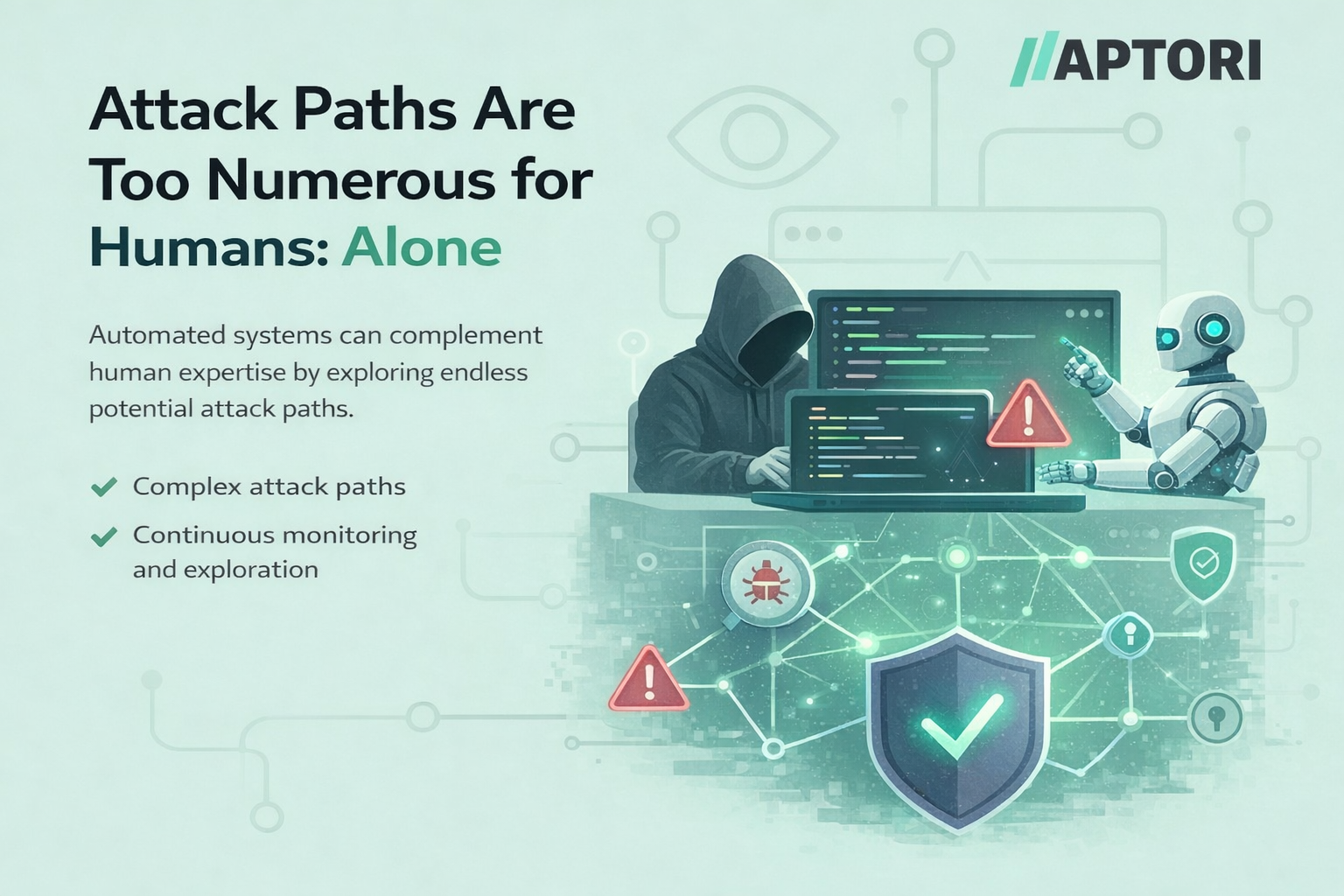
Penetration testers are highly skilled at thinking like attackers. They can discover subtle weaknesses in application logic and identify complex exploitation paths.
But even the most experienced tester faces a fundamental limitation: time.
A penetration test may last a few days or weeks. During that time, the tester must understand the application, explore its attack surface, and attempt to identify meaningful vulnerabilities.
Modern APIs can expose thousands of potential interaction paths.
Manually exploring this space is simply not feasible.
As a result, testers focus on the areas most likely to produce results. While this strategy often uncovers important issues, many interaction paths remain unexplored.
Automated systems can complement human expertise by exploring the application continuously and systematically.
Automated Runtime Exploration
Scaling Security Testing Beyond Manual Effort
Automated runtime exploration - distinct from DAST and traditional penetration testing in its approach - provides a way to analyze APIs at a scale that manual testing cannot achieve.
Instead of relying solely on predefined payloads or limited manual exploration, automated systems observe how the application behaves and then explore additional interaction paths.
This process may involve:
- generating sequences of API interactions
- switching identities to test authorization boundaries
- manipulating object references across workflows
- exploring alternate execution paths across services
By continuously exercising the system through realistic interactions, automated analysis can uncover vulnerabilities that depend on complex relationships between APIs, identities, and objects.
This type of exploration is particularly effective for detecting issues such as:
- Broken Object Level Authorization (BOLA)
- workflow bypass vulnerabilities
- privilege escalation across services
- transactional manipulation
These vulnerabilities are difficult to detect through traditional scanning tools and time-consuming for manual testers to discover.
The Role of Pentesting in Modern Security
Penetration testing remains an important part of a mature security program. Skilled testers can identify subtle vulnerabilities, validate security controls, and provide insights that automated systems may not immediately uncover.
However, penetration testing alone cannot provide continuous assurance in rapidly evolving API ecosystems - or prove that systems are actually secure by design.
Modern application security requires a combination of approaches.
Manual testing provides depth and expertise. Automated systems provide scale and continuous validation. Together, they allow organizations to monitor application behavior as it evolves and identify vulnerabilities as they emerge.
Securing APIs in a Continuous World
APIs now form the backbone of modern digital systems. They connect services, enable integrations, and power nearly every user interaction.
As these systems grow more complex and evolve more rapidly, the methods used to secure them must evolve as well.
Periodic penetration tests provide valuable insight, but they cannot keep pace with modern development velocity or explore the vast interaction space of API-driven architectures.
Securing modern APIs requires continuous validation and automated runtime exploration.
Because in a world of constantly evolving systems, security cannot rely on occasional snapshots.
It must be validated continuously. Semantic Runtime Validation is what makes that continuous behavioral validation possible - at the scale and speed modern API ecosystems demand.
Take control of your Application and API security
See how Aptori’s award-winning, AI-driven platform uncovers hidden business logic risks across your code, applications, and APIs. Aptori prioritizes the risks that matter and automates remediation, helping teams move from reactive security to continuous assurance.
Request your personalized demo today.


.svg)
.svg)


